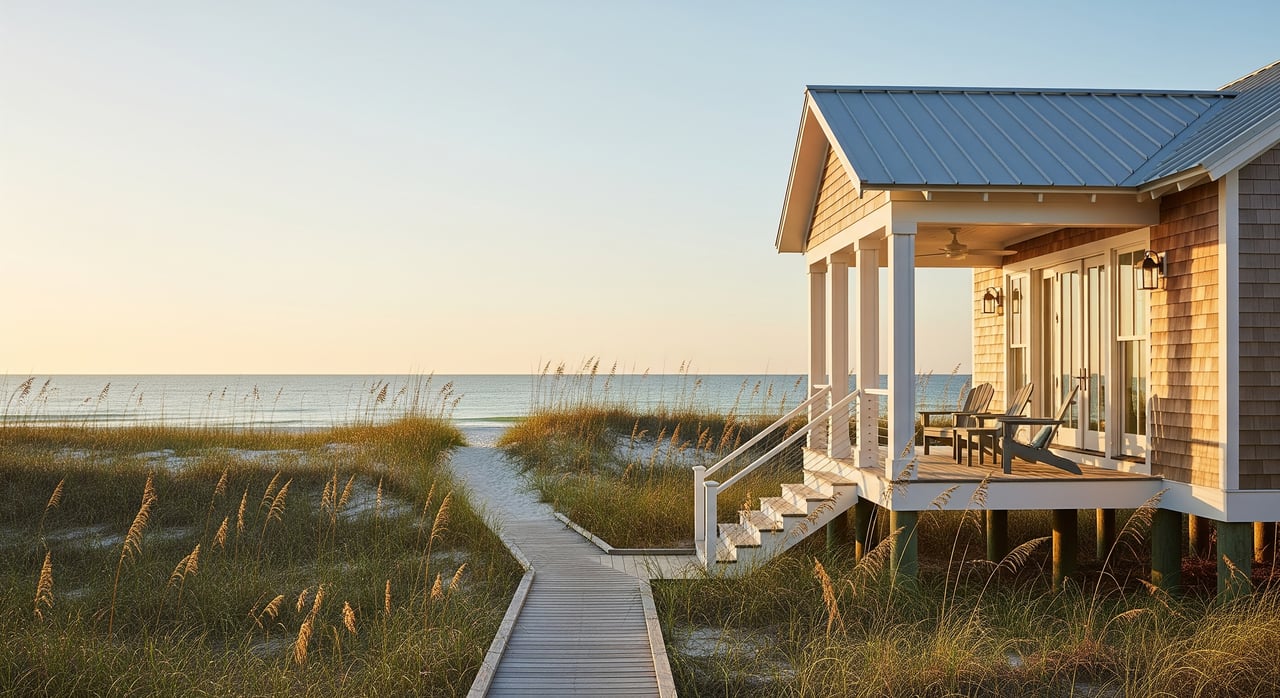
Gulf-Front vs Gulf-View on 30A in Grayton Beach
November 21, 2025
November 21, 2025
Is your heart set on the sound of the surf or a sweeping water view without the front-row price tag? If you are comparing gulf-front and gulf-view options in Grayton Beach, you are not alone. Buyers and sellers often weigh lifestyle, value, and risk differently in this part of 30A. In this guide, you will learn how each option performs on price drivers, risk and insurance, rentals, and resale, plus what to check before you commit. Let’s dive in.
Gulf-front means direct beachfront. You typically have immediate, unobstructed access to the Gulf, often with private or deeded access that crosses dunes. Along 30A, true gulf-front parcels are scarce, especially around Grayton Beach, so they attract strong demand.
Gulf-view means you can see the Gulf, but the property sits back from the shoreline. That could be across a street, behind dunes, or on an elevated site. Views can range from panoramic to partial and may change with vegetation or neighboring homes.
Grayton Beach is part of unincorporated Walton County and includes historic neighborhoods alongside Grayton Beach State Park. County rules, state coastal rules, and the park influence what you can build and how you access the beach. For park boundaries and public access context, review the official page for Grayton Beach State Park.
Before you buy or plan a project, check local regulations and flood designations. Start with the FEMA Flood Map Service Center for flood zones and base flood elevations. Then review coastal permitting under Florida’s Coastal Construction Control Line program through the Florida Department of Environmental Protection’s Office of Resilience and Coastal Protection. For tax and parcel history, the Walton County Property Appraiser is a useful reference.
Why gulf-front commands a premium:
What affects the gulf-front vs gulf-view price spread:
There is no one-size premium for gulf-front over gulf-view. In Grayton Beach, the spread can be significant, but it depends on immediate comps, lot traits, and timing. Ask your advisor to pull recent local MLS comps for your exact street or block.
Flood, surge, and erosion risk rise as you move closer to the water. Gulf-front parcels are more likely to fall in FEMA coastal velocity (V) zones or AE zones. These zones come with stricter construction requirements and can mean higher flood insurance premiums. Confirm the property’s zone using the FEMA Flood Map Service Center, and obtain or order an elevation certificate.
Insurance has two major buckets: wind or hurricane coverage and flood coverage. Factors that raise premiums include lower elevation, older construction that does not meet current codes, and limited mitigation measures. Florida’s insurance market has changed in recent years. It is smart to obtain quotes from local brokers who understand Walton County before you finalize an offer.
Erosion and long-term sea level projections matter for owners, lenders, and insurers. Coastal management efforts can help but do not eliminate risk. Consider how dune systems, elevation, and historical shoreline change influence long-term value.
Gulf-front properties often face more complex permitting due to their location relative to Florida’s Coastal Construction Control Line. If a project falls seaward of that line, additional state reviews and dune protections apply. Learn the basics through the Florida DEP’s Office of Resilience and Coastal Protection.
At the county level, setbacks, dune preservation, and coastal construction standards guide what you can build and how you can rebuild after storms. Expect requirements for elevated foundations, pilings, and wind-resistant construction. Timelines may be longer for gulf-front permits because of added documentation.
Salt, wind, and sand demand more frequent maintenance. Gulf-front owners typically see higher exterior upkeep, corrosion, and sand intrusion. Dune stability and vegetation often require attention.
Gulf-view owners still face a salt environment, but exposure to surge and erosion is usually lower. That can mean lower flood-related maintenance costs compared with direct beachfront. Budget conservatively for both, and plan for periodic exterior refreshes.
Grayton Beach and 30A are strong vacation markets, and gulf-front rentals usually command higher nightly rates and strong peak-season occupancy. Guests value private access and direct shoreline experiences.
Gulf-view or near-beach homes can perform well with broader price-sensitive demand. They often trade higher occupancy at lower nightly rates. If you plan short-term rentals, confirm local rules for unincorporated Walton County and check any HOA or neighborhood covenants. You will also need to register and remit applicable state and local taxes. For state tax guidance, see the Florida Department of Revenue’s Taxes page, and for tourism tax information and host resources, review the Walton County Tourist Development Council at Visit South Walton.
Operationally, consider insurance for rental activity, furnishings, turnover costs, and storm prep and recovery. Gulf-front can generate higher gross revenue but often carries higher operating expenses. Build a local pro forma that uses current nightly rate data, occupancy assumptions, and realistic insurance and maintenance costs before you buy.
Choose gulf-front if you prioritize direct access, privacy, and the sensory experience of the shoreline, and you are comfortable with higher insurance, maintenance, and regulatory complexity. Choose gulf-view if you want strong lifestyle value and water vistas at a lower entry price and with wider buyer pool appeal at resale.
If you are buying for rental income, weigh higher gross potential on gulf-front against higher costs and compliance obligations. If you are buying for lifestyle first and investment second, focus on the specific street, view corridor, and dune profile. The best choice depends on your goals and risk tolerance.
Use this quick checklist for both gulf-front and gulf-view purchases:
Appraisers rely on recent local sales, but scarcity and limited comps can create volatility, especially for gulf-front. Lenders often require elevation certificates in flood zones and may apply different loan-to-value or escrow requirements based on perceived risk. Work with a team that can assemble a strong comp set and manage appraisal expectations.
For gulf-front and gulf-view decisions in Grayton Beach, local nuance matters. Small changes in dune width, access, elevation, and sightlines can shift price and long-term risk. A tailored strategy should include a custom comp set, insurance quotes, and a permitting path that matches your goals.
When you are ready to compare addresses or prepare to sell, reach out for discreet guidance and a data-backed plan. Connect with Tom Fitzpatrick to explore on-market and private opportunities and to request a complimentary market valuation.
Specializing in 30A luxury properties, Tom offers an unparalleled level of service, marketing expertise, and personalized attention, ensuring your real estate needs are met with honesty and integrity.