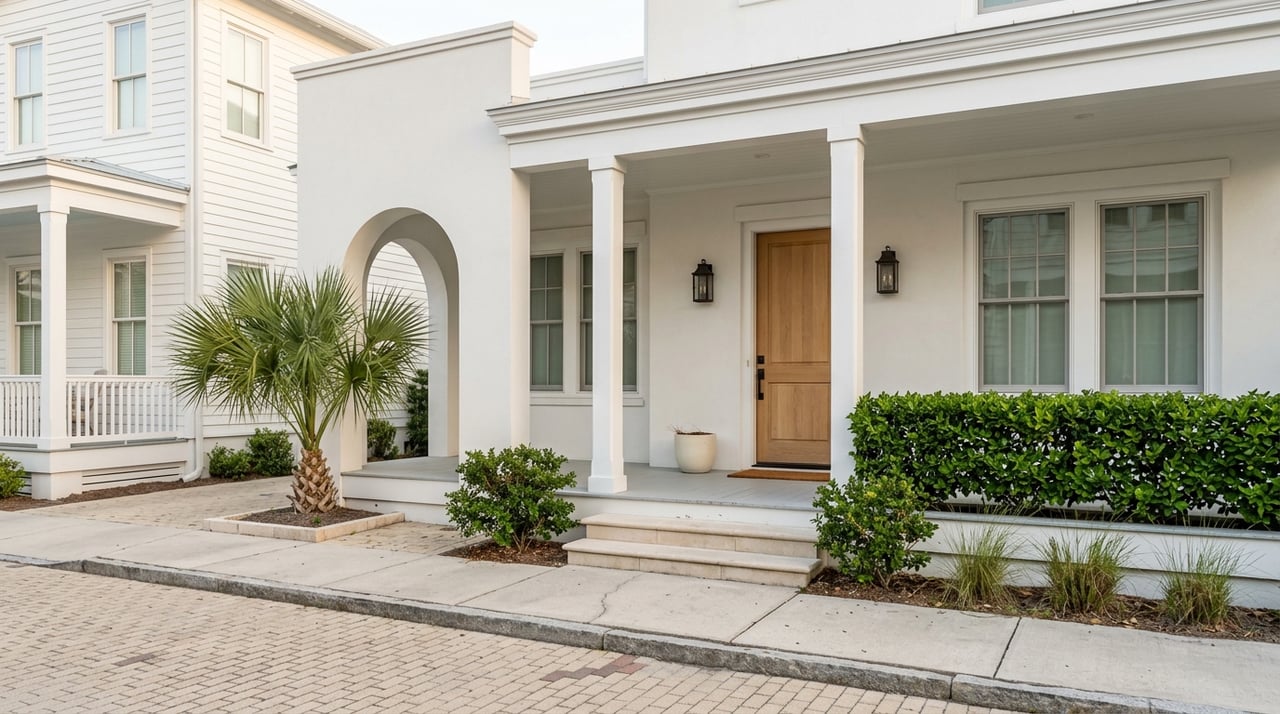
How Seaside FL Design Code Living Shapes Daily Life
May 14, 2026
May 14, 2026
Curious why Seaside feels so different from many other beach communities along 30A? The answer is not just the architecture. It is the design code behind it. If you are considering buying, selling, or simply trying to understand what gives Seaside its distinct character, this guide will show you how the town’s rules shape everything from the look of the streets to the rhythm of daily life. Let’s dive in.
Seaside sits in Walton County along Scenic Highway 30A between Destin and Panama City Beach. According to the official Seaside site, construction began in 1981 on an 80-acre parcel with two houses, one street, and a beach pavilion. Today, the town includes more than 300 homes, along with restaurants, shops, and galleries.
What sets Seaside apart is that it was conceived as more than a beach community. The town was designed so architecture, public spaces, and layout would support walking, community life, and respect for the natural setting. That planning approach helps explain why Seaside feels unified rather than pieced together lot by lot.
The Seaside Institute describes the town as a living laboratory for sustainable places. In that same spirit, New Urbanism emphasizes mixed-use neighborhoods, pedestrian and bicycle movement, public spaces, and design that reflects local history, climate, and ecology. In Seaside, those ideas are not abstract. They show up in how you move, what you see, and how the neighborhood functions day to day.
Seaside’s posted Architectural Regulations, dated 2014 and noted as subject to amendment, show just how broad the code is. It does not only address house massing or setbacks. It also covers walls, doors, windows, porches, balconies, roofs, attachments, signage, lighting, colors, and sitework.
That kind of oversight matters because it shapes more than curb appeal. It shapes consistency, visual calm, and the overall experience of being in town. For homeowners, it also means exterior changes are part of a larger design framework, not just a matter of personal preference.
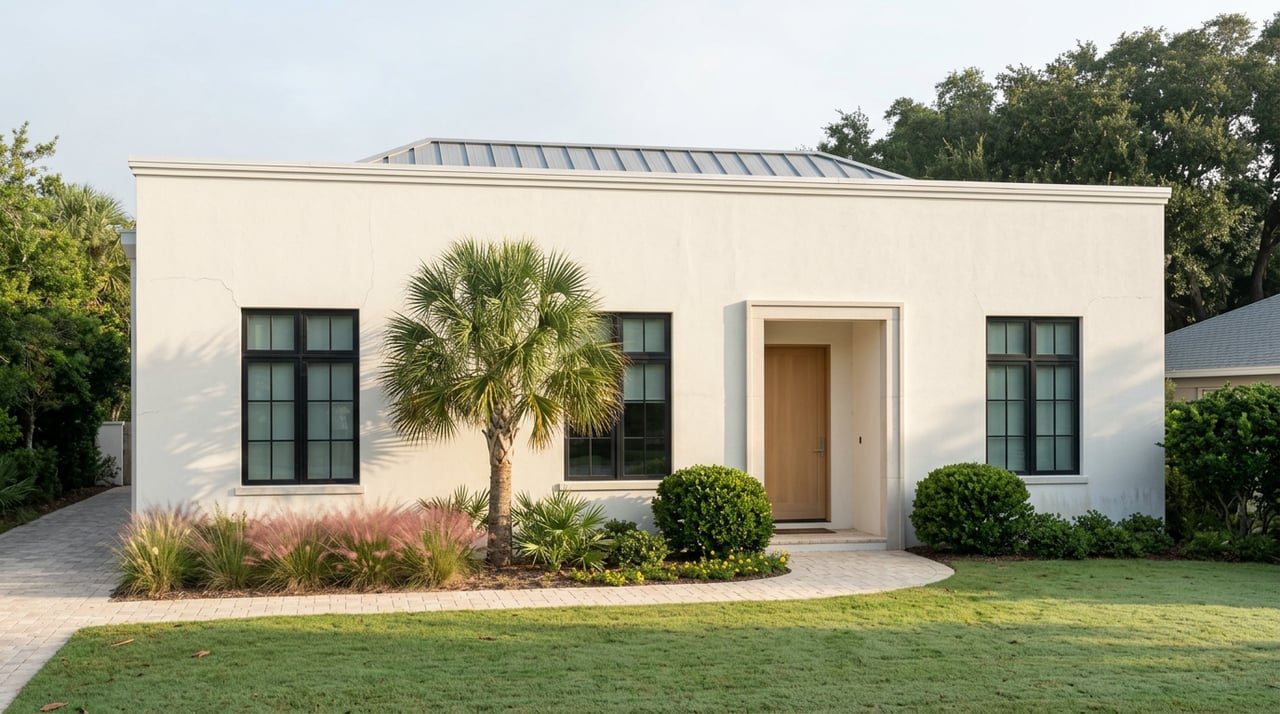
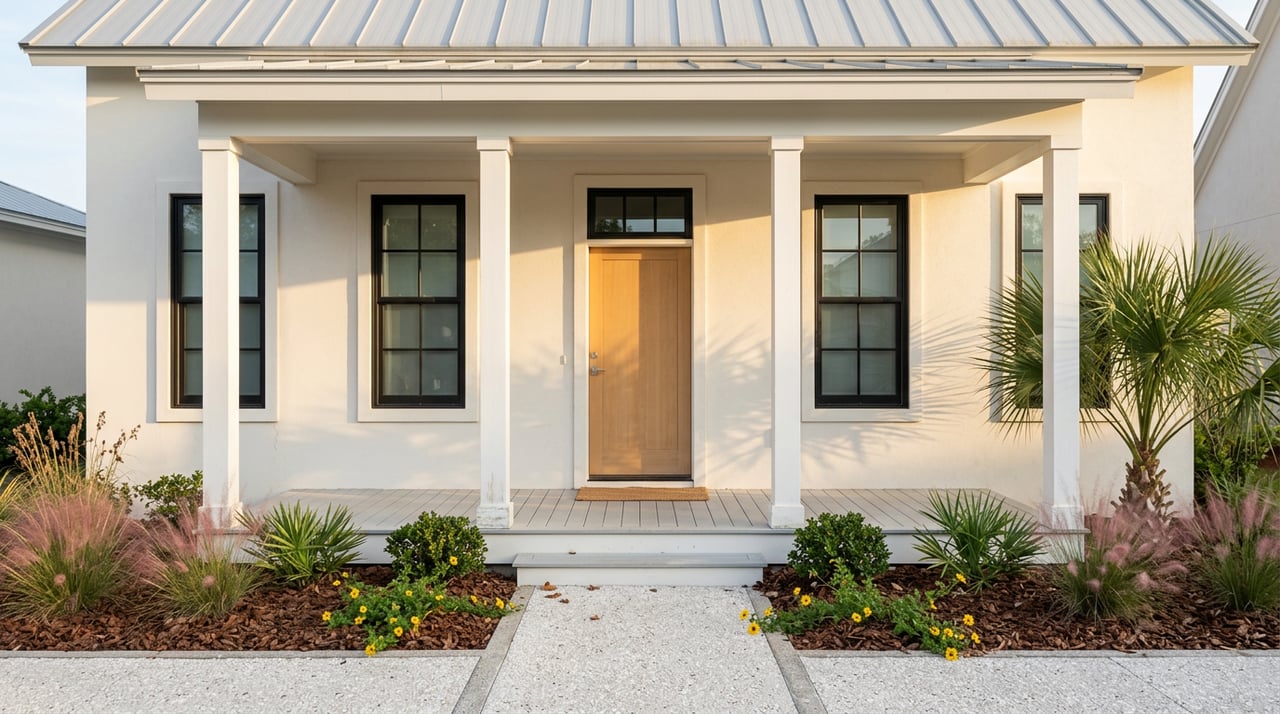
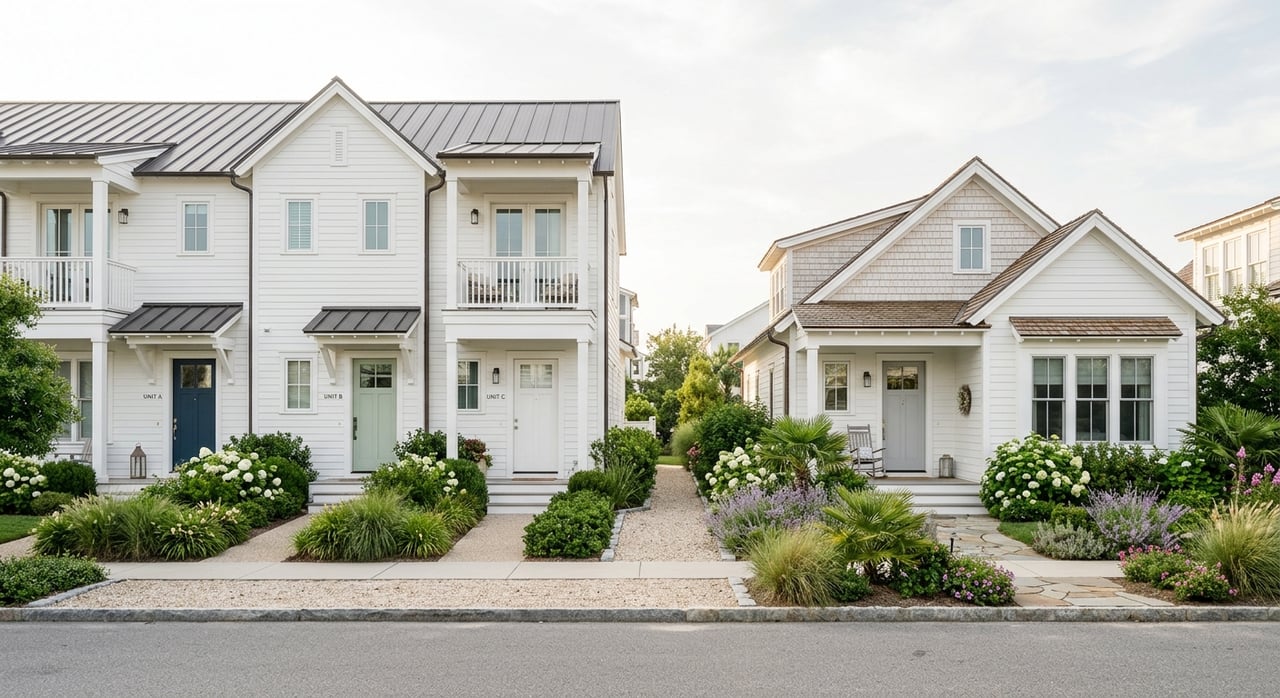
The architectural rules guide Seaside toward a consistent regional look. Residential doors and garage doors are required to be wood, windows are wood, and porch floors must be rot-resistant wood. Synthetic decking is prohibited.
The code also limits garage door width and favors traditional proportions, visible trim, and natural-looking materials over more artificial finishes. Even storm protection is treated with restraint. Hurricane protection can be handled through laminated glass or hidden shutters so the streetscape remains visually cohesive.
In practical terms, this affects what you see every time you walk down a block. Homes feel related to one another without being identical. That balance between variety and order is one of the reasons Seaside feels polished and enduring.
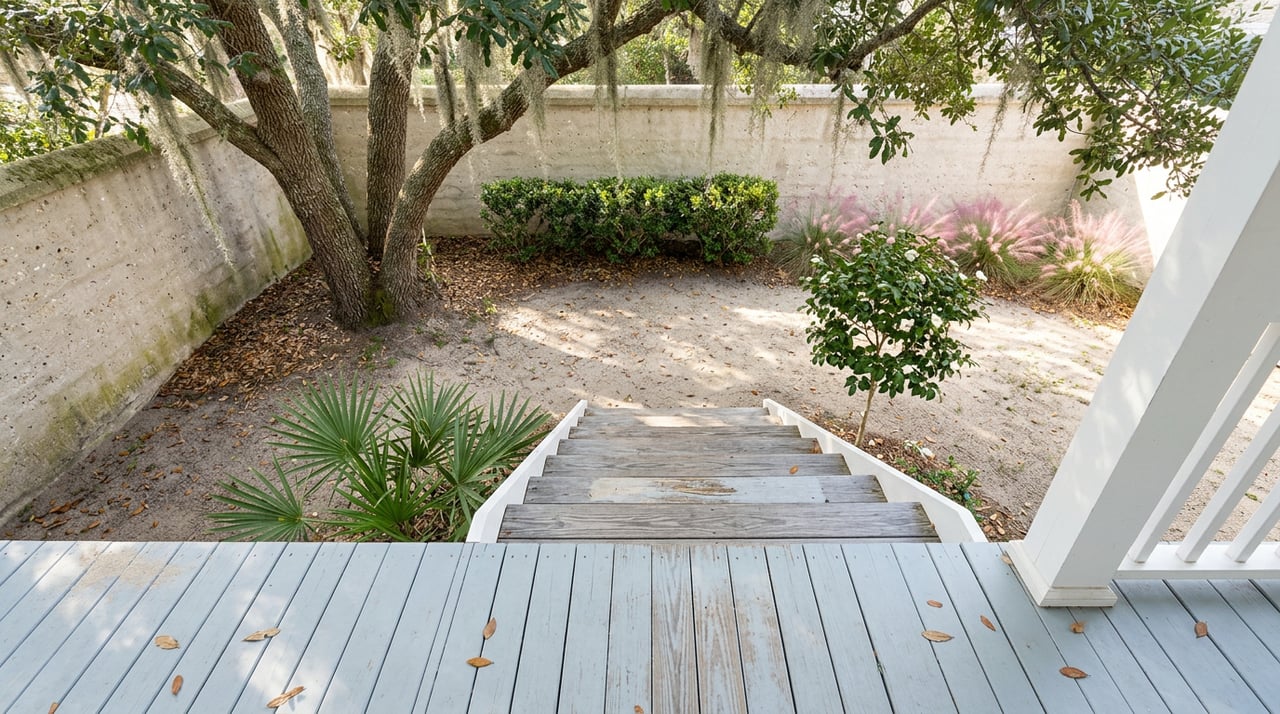
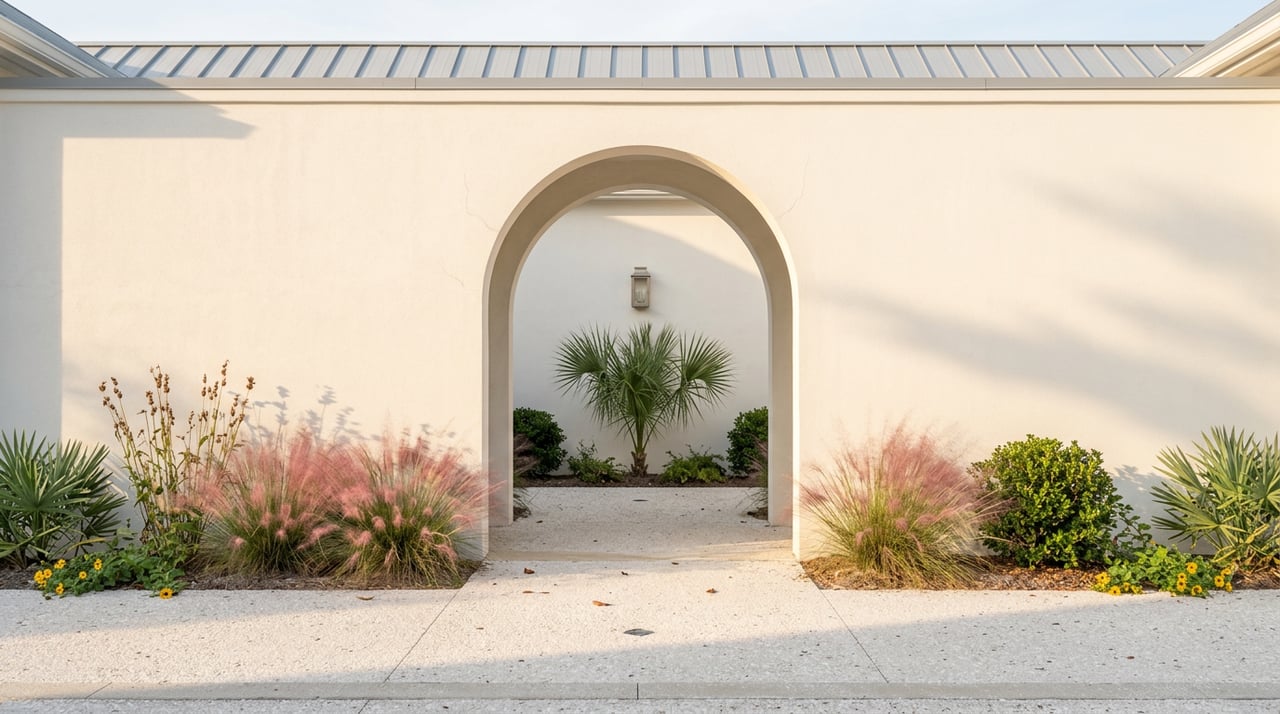
The sitework rules are just as influential as the building rules. Fences must be wood, paths must be sand or white clay, and driveways should be pervious and are tightly limited in width. Grass is prohibited on residential lots, pine straw is allowed, mulch is not, and planting must come from Seaside’s approved plant list.
The code also addresses trees, picket fences, and driveway gates with care. As a result, the front edge of each lot contributes to a highly ordered street scene. Instead of a patchwork of competing landscape choices, the town reads as one connected environment.
For everyday living, this means the public realm feels curated and predictable. Streets are not dominated by oversized paving, lush turf, or heavy visual clutter. The landscape supports the architecture rather than competing with it.
Seaside also regulates mood through lighting and color. Exterior lighting must be shielded and warm white, and the code discourages light spillover. That creates a softer nighttime experience and helps maintain a more relaxed street atmosphere.
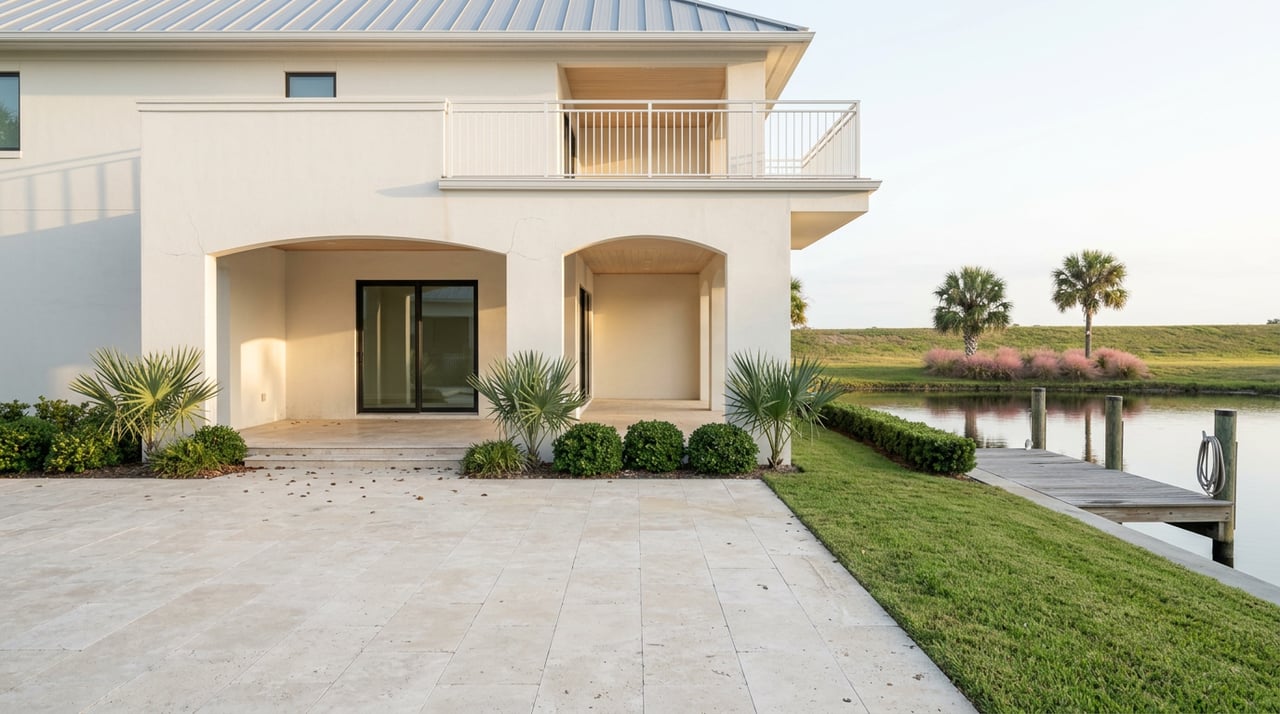
Color is also handled with a clear framework. Lighter colors are intended closer to the Gulf, while white is reserved for civic buildings. The result is a restrained palette that feels coastal without becoming overly bright or chaotic.
If you have spent time in beach communities with strong signage, mixed exterior colors, and harsh lighting, the difference in Seaside is noticeable. The town feels calm because its visual elements are disciplined.
A design code can sound technical until you see how it affects your routine. In Seaside, the code supports a way of living that is more walkable, more social, and less dependent on a car. That is where the design becomes personal.
Seaside’s official materials say the town was intentionally designed to be walkable, with brick-paved streets, white-sand footpaths, and a centrally located town square that places dining, shops, the beach, and porch-lined homes within easy reach. The town center is said to be within a five-minute walk of all residences, and many visitors rarely need a car once they arrive.
The Seaside Institute adds that the town is about a 10-minute walk from end to end. It also notes that the narrow streets are better suited to walking and biking than driving. That difference shapes how you spend your day, how often you interact with neighbors, and how naturally public life becomes part of your routine.
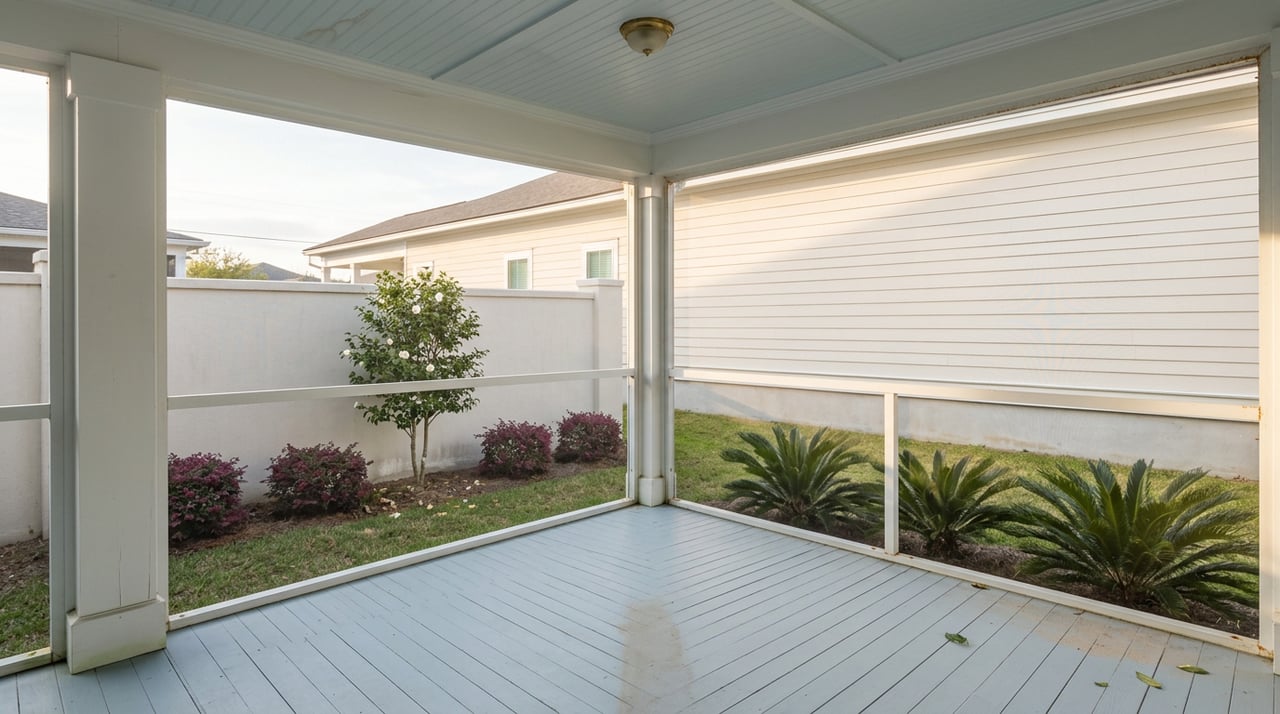
One of the clearest ways the code shapes behavior is through the emphasis on smaller homes with front porches on smaller lots. According to the Seaside Institute, this shifts life outward into public space rather than inward into large private backyards.
That is an important distinction. In many neighborhoods, private outdoor space becomes the main gathering area. In Seaside, porches, paths, squares, and pavilions help create a more shared daily experience.
If you own in Seaside, this can influence how the home feels in use. A porch is not just an architectural feature. It becomes part of how you enjoy the neighborhood, greet passersby, and participate in the life of the street.
Seaside’s layout gives public spaces a central role. The Seaside Institute points to Central Square, Ruskin Place, and the beach pavilions as the shared outdoor rooms of the neighborhood.
That language is helpful because it captures how these spaces function. They are not leftover areas between buildings. They are part of the living environment, designed to be used and experienced regularly.
For buyers, this can be a major appeal. You are not only evaluating the home itself. You are also buying into a community structure where outdoor civic spaces are part of daily life.
Another reason Seaside feels alive is its mixed-use pattern. The Seaside Institute says Central Square includes first-floor retail, groceries, restaurants, and cafes, with offices on the second level and residences above.
That mix helps keep the area active at different times of day. Instead of separating errands, dining, work, and living into distant zones, Seaside brings them together in a compact footprint. That supports a more convenient and less car-oriented lifestyle.
For second-home buyers and lifestyle purchasers, that ease can be a real advantage. You can step out for coffee, dinner, or a quick errand on foot, which changes the pace and feel of everyday living.
Scenic Highway 30A is not one uniform place. Florida Scenic Highways describes the corridor as a 24-mile coastal stretch with an eclectic mix of architecture, including Old Florida traditional homes, Seaside cottages with white picket fences, and broader New Urbanist influences.
That context matters because Seaside stands out even within 30A. Its design language is more thoroughly coordinated than what you find in many beach neighborhoods. The result is a stronger sense of visual continuity from one block to the next.
In a more conventional beach neighborhood, each lot may express a very different style, landscape treatment, driveway approach, lighting scheme, or exterior material palette. In Seaside, the code creates clear boundaries around those choices. You still get variety, but it exists within a disciplined framework.
This leads to a straightforward tradeoff. In Seaside, you have less freedom to make arbitrary exterior changes. At the same time, you gain a more predictable streetscape, a stronger sense of place, and a neighborhood that functions as a unified whole.
For many owners, that predictability is part of the value. The town’s design standards help protect the visual character that makes Seaside recognizable and desirable. That can matter whether you are purchasing for personal enjoyment, long-term holding, or as part of a broader 30A lifestyle strategy.
If you are considering a purchase in Seaside, the design code is not a side detail. It directly affects renovations, exterior materials, landscape choices, lighting, and how a property presents in context. Understanding those expectations early can help you evaluate whether Seaside is the right fit for your goals.
If you are selling, the same code can be part of the property’s appeal. Buyers are often drawn to Seaside because the town feels coherent, walkable, and carefully maintained. Those qualities are not accidental. They are built into the physical rules that shape the neighborhood.
For high-end coastal buyers especially, Seaside offers more than proximity to the beach. It offers a highly intentional living environment where design standards support daily experience. That is a meaningful distinction in the 30A market.
If you are weighing a purchase or preparing to position a property for sale in Seaside, working with an advisor who understands how community design affects buyer perception can make the process more informed. To start a confidential conversation about Seaside and the broader 30A market, connect with Tom Fitzpatrick.

Specializing in 30A luxury properties, Tom offers an unparalleled level of service, marketing expertise, and personalized attention, ensuring your real estate needs are met with honesty and integrity.